This is Blog No 128
It’s complicated!
When the overwhelming picture is of people voting against an incumbent (except for Scotland) there are some awkward consequences.
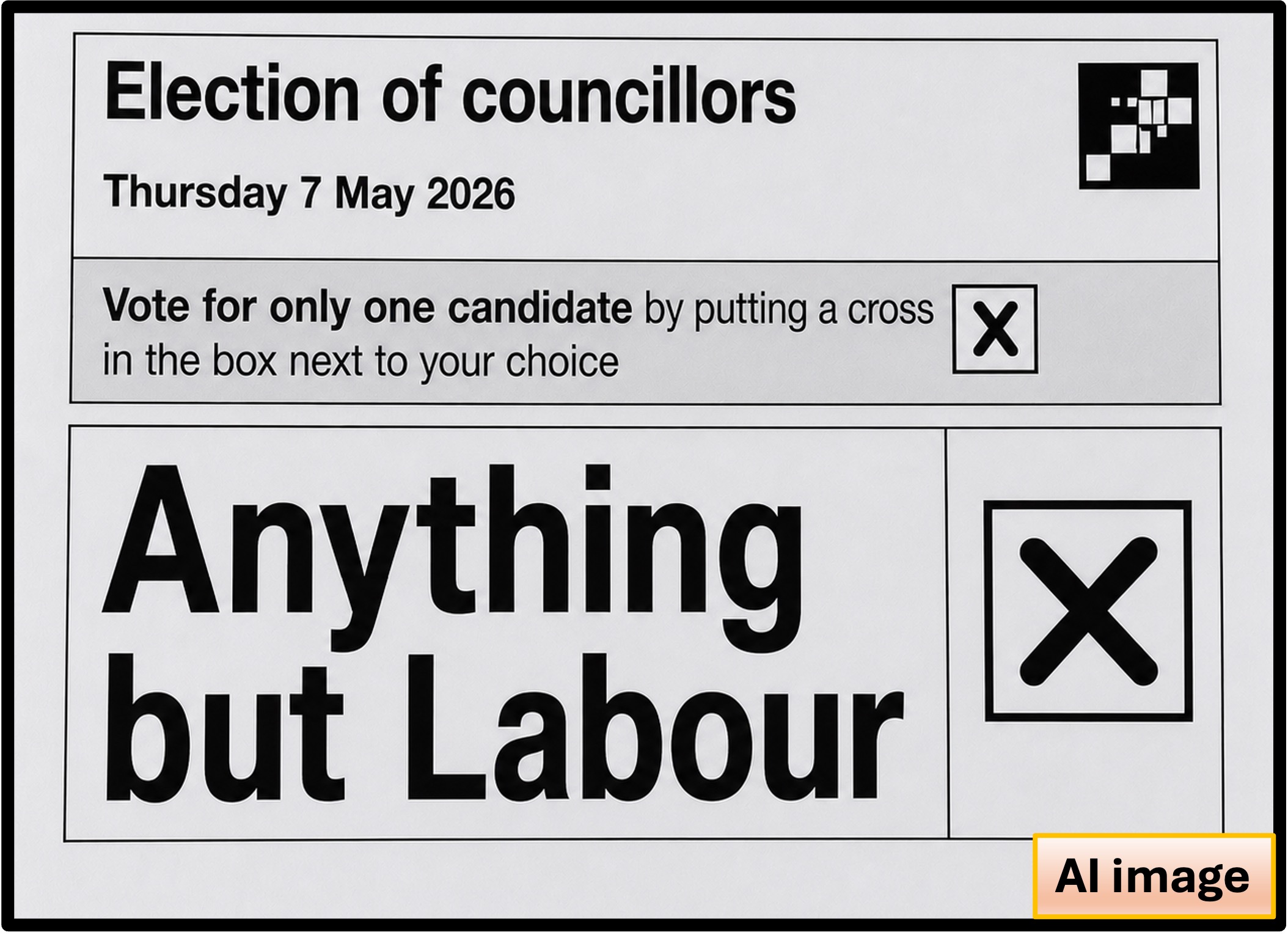
It may well be that democracies just find it difficult to cope with twenty years of economic standstill, and that it rebels against politicians who have been too timid to admit to the challenges they face. Remember that Labour won the last General Election by pretending it could bring about ‘change’ by relying on economic growth (thwarted by Trump) and ruling out increases in the most obvious taxes. No wonder it’s been derailed – and no wonder the electorate has thrashed around to look for alternatives.
For local Councils, the new landscape includes a mixture of parties facing in entirely different directions.
The Liberal Democrats (150+ new Councillors) would claim a long tradition of ‘community politics’ and, in theory, are committed to many consultative processes. A 2018 Policy Paper called Power for People and Communities included the clear-cut statement “Our key aim is to involve more people in the design and delivery of services and particularly to ensure that they are able to influence the decision-making process.” The extent to which it has achieved this could be debated, but, philosophically, it appears to know its mind.
The Green Party (375+ new Councillors) has less of a track record, but also talks the same language. Like the LibDems, Green politicians have misgivings about local government reorganisation, and the creation of larger, more remote authorities. It has championed Green Assemblies, supports co-production and stronger transparency and accountability.
In contrast, Reform UK (1,450+ new Councillors) seems hopelessly conflicted. Its instincts are to return to a simpler, direct-accountability model strong on ‘common sense’ and less bureaucracy. Its well-known antipathy to equality/diversity and net zero policies suggest a reluctance to consult local people and to rely, instead, on top-down national guidance. On the other hand, it has frequently campaigned against unpopular infrastructure projects and housing developments. Presumably, therefore, it will be keen to secure sufficient consultation on any initiatives that that arouse popular opposition.
In the meantime, of course, Conservatives and Labour still control many Councils. In all the excitable media coverage it is easy to forget that they still hold over 4,000 and over 5,000 elected members respectively. They will, however, be facing many newly-elected Councillors representing the insurgent parties. Very few of them can totally relax and continue with ‘business as usual’. There will need to be substantive changes – to policies and the way in which they are implemented. And procedural – meaning the way in which Councils conduct their business and relate to local people.
Public engagement is very much about the process. There is widespread acceptance that local communities often feel very detached from Council structures, and that formal consultations amount to little more than ‘going through the motions’.
In most cases, this is very unfair to officers who have, generally speaking, run conscientious consultation exercises on challenging situations. It may also be unfair to elected members who have deliberately factored stakeholder input into their decision-making. None of this seems to count for much, when the prevailing mood is anti-politics and anti-bureaucracy. Inexperienced politicians don’t want to bother with consultation if they feel they can get away with favoured policies without engaging with those that might be affected. In time, of course, they may learn that ill-considered decisions can rebound on even the most confident leaders.
IN SUMMARY
- Much local consultation is required by statute – though Councils have more discretion on how to conduct it than is often realised.
- Where consultation is discretionary, the approach may reflect the pre-disposition of the party – or individuals in power. Some will make a virtue of consultation; others will try hard to avoid it!
- In both cases, there will be a tendency towards seeking more agile forms of engagement. The traditional one-off set-piece format – for all its virtues – may become more of a rarity.
If we intend to consult LESS, how do we do it?
At this point, forgive me for pointing to the FOUR FUNCTIONS FRAMEWORK that I published six months ago. Its central idea is that most consultations need to be tied to the purposes for they are intended and Councils need to adopt appropriate processes that would be acceptable to local elected members. I use a simple but effective Framework for defining consultation purposes:-
- NAVIGATION– What are our objectives? Where are we trying to go? What’s the direction of travel?
- EXPLORATION– What are the various ways we could get there? What are the ideas or options? Can we co-produce some solutions?
- DETERMINATION– The choices we have to make between alternative actions.
- IMPLEMENTATION – How can we give effect to decisions or projects? What dialogue needs to be held with those who are impacted?
The nature of the consultation and the standards by which they should be judged will vary according the function being performed. (To read the full Background document, click here)
This is not the only way to re-address consultation practice in local government. But it remains an option which colleagues may wish to consider. The irony is that one interpretation of the radical results of the elections is a rejection of slow and deliberate solutions in favour of quick and instinctive answers.
This holds many risks – and consultation may yet be needed to make better-informed choices and ensure more people-centred administration.
It will NOT be ‘same old again’
Rhion H Jones LL.B
May 2026
For more like this, and to receive the monthly Consultation Catch-up, click here
Leave a Comment
I hope you enjoyed this post. If you would like to, please leave a comment below.