This is Blog no 120
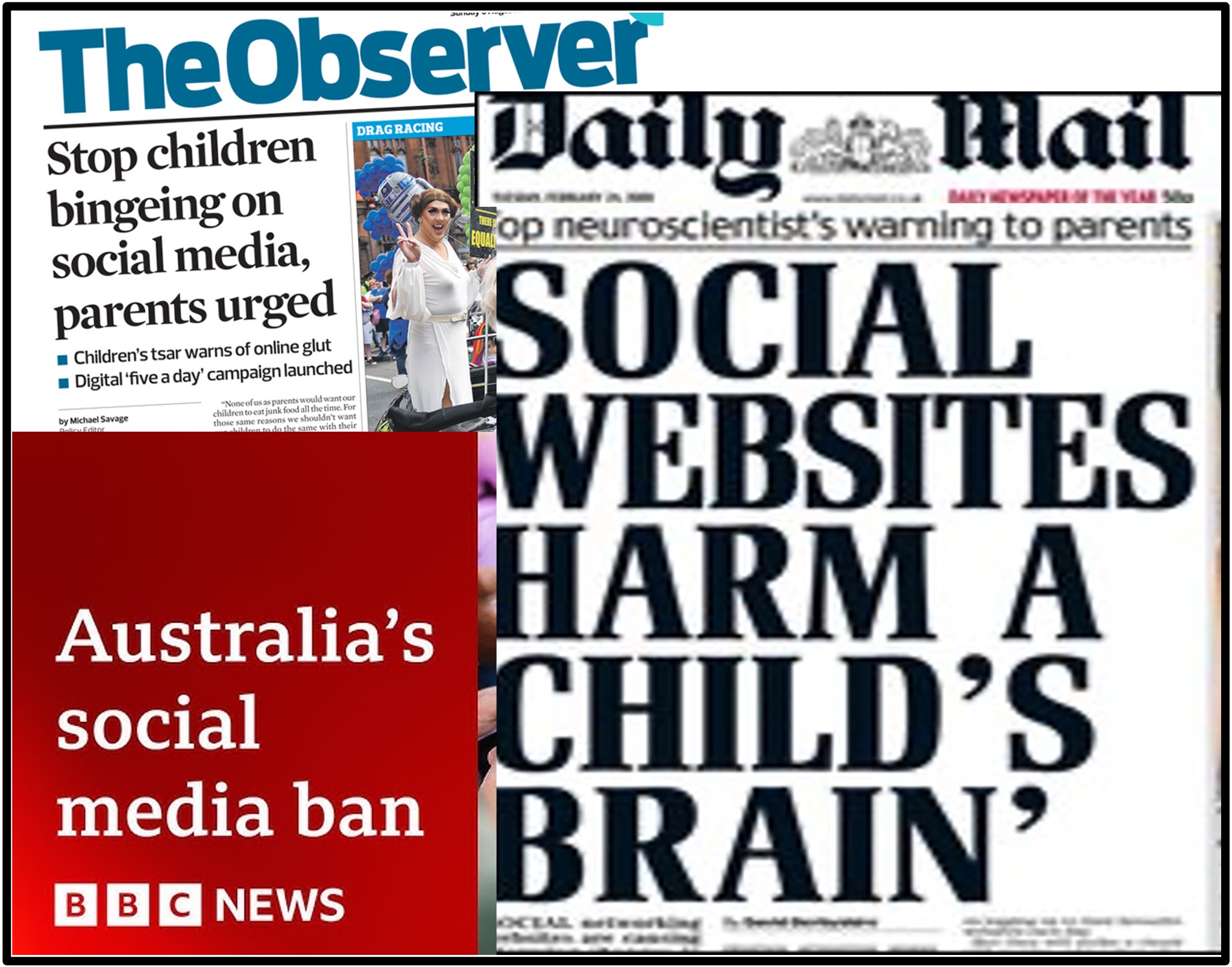
Like many others I heard the BBC’s news report that ‘The Government is launching a consultation on restricting the use of social media by children under 16’. No surprise, because the media has been discussing the Australian policy for some months.
The Press Release was effusive. “Government launches consultation on children's social media use and bans phones in schools to protect young people's wellbeing and ensure safer online experiences.”
Technology Secretary, Liz Kendall is quoted as saying “We are determined to ensure technology enriches children’s lives, not harms them - and to give every child the childhood they deserve.”
Eagerly, I looked for the relevant documents but couldn’t find them. I contacted the Departmental Press office. I said, ‘You’ve launched the exercise, so why can’t I find it ..?’ Ultimately, it emerged that loose language had crept into the statement. This was, apparently an announcement. Not a launch!
It is easy to find fault – especially with the current Government, and one assumes that Ministers are keen to be seen to respond to public and media pressure. There is a long history of Governments finding public consultations a most useful device to take the heat out of various situations and being seen to ‘do something’. At worst, it is a way to kick an issue into the long grass.
And yet, there is a strong case for pre-announcing a consultation.
Consultation should never be an end in itself. In policy-making terms, it can happen at several points in the cycle. Using the terminology I propose as part of the FOUR FUNCTIONS FRAMEWORK, there is always the need for clarity in What are We Trying to do? or Where are We Trying to Go? and that might involve a NAVIGATION consultation. Organisations who get into difficulty often do so because they muddle through without ever sorting out the confusions and ambiguities of their agenda. Only if these are resolved can one have a worthwhile EXPLORATION of the options on what to do. The key question is Upon what aspects are we open to influence? and this is where a pre-announcement can be useful:
- It kicks off the debate. Whatever discussion the issue has prompted hitherto, announcing a forthcoming consultation usually galvanises interested parties into more serious debate. That is good.
- It is a ‘statement of intent’ – and helps identify the stakeholders. Many topics rumble away for years without any suggestion that decisions may be taken. An announcement can be a clear signal that someone is taking the issue seriously
- It is an opportunity to listen. There is time for those designing the consultation to absorb the direction of the debate, and maybe to revise their thinking about potential options and impacts.
- It can bring key stakeholders on board. As a consequence of the above there are opportunities for key stakeholders to influence the scope, design and methodology of the exercise. Ideally, a consultor will sit down with them to explore the extent of potential consensus on these matters. A Stakeholder Advisory Group can be an excellent move.
- It helps with timing. This pre-consultation period also helps consultors work out their timetable. The formal launch will almost certainly need to explain what the next steps will be.
There is a half-way house. Undertake this desirable pre-consultation activity in confidence, away from the glare of publicity. Many Government consultations emerge from such a practice. But the lack of transparency can be an issue. There is the usual ‘Who is in the room?” problem, running the risk that stakeholders excluded from this dialogue may feel aggrieved and likely to dispute the process once it gets under way.
In this particular case, the issue has shot up the political agenda – to the point that Ministers can no longer ignore it. There is also polling evidence that the public strongly supports an Australian-type restriction on under 16s. Tellingly, the 74% support reported by Yougov in December 2025 seems mirrored across the political, age and socio-economic divides.
This creates its own difficulties. A ‘bandwagon effect’ can put pressure on Ministers to signal its agreement in principle, reducing its credibility if it purports to have an open mind when a consultation starts. Legal challenges can expose consultors to the risk of pre-determination, and on a subject as contentious as this, one wonders whether US companies with deep pockets will not relish the possibility of litigation and tying up the issue in the Courts – much as the tobacco industry once did.
This consultation therefore must be of the highest integrity and be crystal clear what is and what is not in scope. It should set out the arguments fairly and presumably draw upon such evidence as is now emerging from the experience in Australia. That may not be easy, and it will be contested space, with reports that enterprising youngsters are adept at workarounds, and that human rights advocates like Amnesty International are worried that young people’s voices may be suppressed.
As usual, there will be people who argue that one cannot possibly take decisions on this one ‘narrow’ policy without opening up a discussion about the ‘wider ‘context. They will claim that “surely we need to have a broader view of…”policies affecting young people … or schools/education … or privacy … or human rights. These are seductive arguments, for often they are valid, and just because they take one outside the formal scope of a consultation, it does not stop the overall discussion, especially in the media, being broader in tone and substance.
But it can also be a dangerous mis-step. Too broad a consultation can give rise to many a side-issue that can obscure the main thrust of proposals. Diving down interesting rabbit-warrens can delay progress, though, of course this can suit the consultor’s purpose if procrastination was its aim in the first place.
Let us hope therefore that Liz Kendall and Bridget Phillipson put this pre-consultation time, be it short or long - to good use. It WILL be contentious, and the quality of the consultation will be an important factor in helping a Government legislate when the time comes.
Rhion H Jones LL.B
February 2026
For more like this, and to receive the monthly Consultation Catch-up, click here
Leave a Comment
I hope you enjoyed this post. If you would like to, please leave a comment below.