This is Blog no 138
When the first Secretary of State, (Deputy PM?) the Chancellor of the Exchequer and the Attorney General feel obliged to write and widely publish a letter to all their Ministerial colleagues, you imagine it must be serious.
It’s an attempt to overcome deeply-embedded inertia in aspects of Government that politicians find frustrating.
Yes it’s back again to ‘ripping up the consultation culture.’!
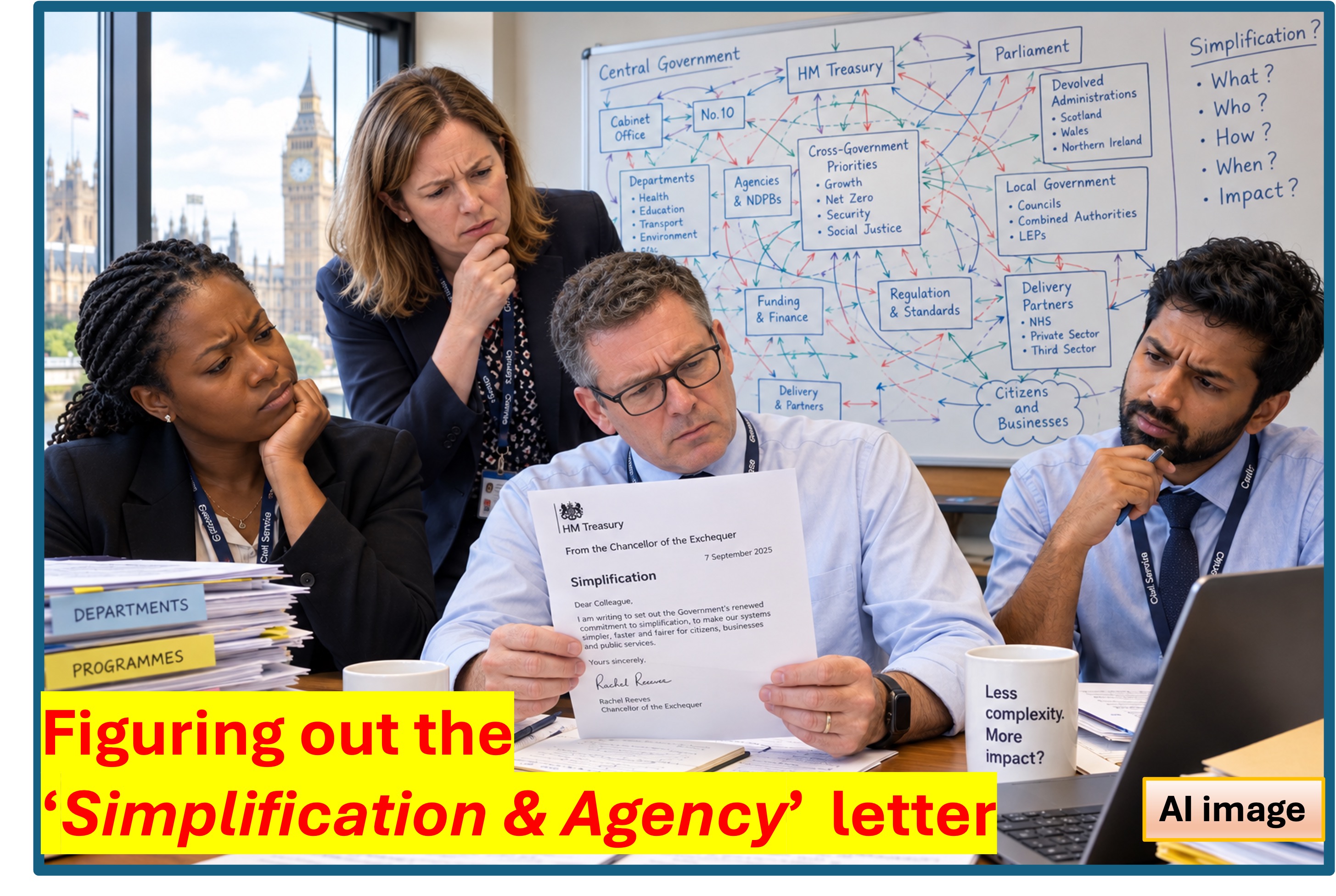
Except they seem to have realised that it’s not quite as easy as some thought. The Rewiring the State Cabinet Paper outlined the general principles (See my Blog 136) and the latest letter – on 7th September takes things further – but not much.
In respect of consultation, it basically says six things:
- Current practice has turned “a sensible mechanism for sourcing external input into an industry of dither and delay, which too often fails to hear from those whose perspectives are most relevant to the issue under consideration.” There is much in this criticism – and I agree with it. But this only happens when consultation is done badly. Skilfully and swiftly managed, and well-targeted, it remains a sensible mechanism.
- There is no general duty of consultation. Yes – that is already the position.
- Ministers want to curb the common law doctrine of legitimate expectation. It even mentions when people have ‘previously promised’ to consult. I think they will have problems with this as Judges don’t like being told that they should legitimise an unfairness. And breaking promises will be seen in many contexts to be unfair.
- They want more participatory policy-making. They go further – “Involving a wider range of people in shaping our thinking earlier and more directly – with ministers and officials leading engagement in ways that reflect the issue at hand, and which help to build back public trust in government.” Well done. Completely agree – except do Ministers accept that this takes longer – and often costs more? It also carries the risk that they be seen only to involve those whose views they favour … One of the reasons for consultation is to acknowledge this risk by ensuring that everyone who wants to be heard can contribute their views …
- They will publish new Guidance and seek to “unwind the thousands of unnecessary consultation and reporting requirements that have come to litter the statute book” This is genuinely ambitious and assumes that people might agree on what is and isn’t necessary. There are, in my view, ideas on how a Consultation Act could help do this, but thousands of businesses, public bodies and voluntary and community sector organisations will have relevant opinions, and it might clutter up the executive for years. Good luck!
- They accept that some consultations are necessary. The letter states that “Formal consultation should only take place where there is a statutory requirement to consult, where it would be conspicuously unfair not to consult, or where ministers believe there is a good case for seeking external input and that the right vehicle for doing so is a formal consultation.” I agree.
IT IS ON THIS LAST POINT that we could make rapid and effective progress. The Consultation GuRU has the answer – or some of it anyway!
Some years ago, I proposed that instead of consultations being initiated and published at the whim of a departmental Minister or a public body, that there should be an open, accessible Register of Official Formal Consultations which should meet all legal and best practice standards. There should be a proper gateway mechanism to approve which these should be and to guarantee their integrity. Consultee rights (per the Gunning Principles) would apply and be legally enforceable.
For all other exercises in consulting stakeholders and the public, there would be a looser form of guidance that would provide more flexibility for consultor organisations and offer a greater range of involvement and participatory options for those wanting to influence policy decisions.
In effect, this is an application of the FOUR FUNCTIONS FRAMEWORK. In general, I anticipate that the Official Formal Consultations would mostly be for the DETERMINATION function – where important decisions need to be taken. Think of some recent high-profile exercises such as on Special Educational Needs and Disability (SEND) or on Social Media access for young people – and how obtaining ‘external input’ makes obvious sense. Consider also how useful it might have been to have had a formal consultation on Assisted Dying so that consultee views could have been a factor – rather than have a democratically-approved Bill halted by a small number of unelected members of the House of Lords.
Many other current consultations are useful, but may need not meet the same legal standards. The 2024 NHS conversation (Change NHS) was a NAVIGATION exercise – where the emphasis was rightly on seeking to understand people’s priorities and preferences rather than their views on specific proposals. We have a similar ‘conversation’ about social care as part of the Louise Casey review – though that is more of an EXPLORATION challenge. A few days ago, I heard that Wes Streeting, as Defence Secretary has suggested another conversation – on defence. Again – all good dialogues to organise – and happily in the context of their preferred ‘participative policy-making’ philosophy.
The trick is to involve people in ways that they feel are meaningful. All the excellent contemporary dialogue methods including Citizens’ Assemblies or Juries, mass virtual deliberations, co-production, and community collective action fail if those who take decisions take little account of what emerges from these processes. In other words, what matters most is not the PROCESS of listening but the OUTCOME of listening.
The truth is that many decisions today are complex, multi-factorial trade-offs and if policy-makers have not sought or heard informed views on the different consequences of alternative actions, those decisions may carry the risks of unintended consequences. Whether they are called consultation or not – and whether they are Formal Official exercises or just some informal dialogues matters less than the objectives that officials are trying to achieve.
The problem with the 7th September letter is that it is far clearer about the processes they want to eliminate than the function they want to fulfil in what remains of the commitment to engage.
We should all co-operate to reform current consultation practice, but we need the change to be well-designed and well-managed by people with credibility in this specialist area. A bungled, top-down, effort to stop routine consultations would just alienate relevant stakeholders and they will not be shy to share their disaffection with the public.
As I finalised this commentary, tci’s paper From Consultation by default to Participation by design was published and is a great contribution to the debate. It confirms my view that making Ministers’ wishes come true is a mighty challenge – but a worthwhile endeavour.
Rhion H Jones LL.B
September 2026
Leave a Comment
I hope you enjoyed this post. If you would like to, please leave a comment below.