This is Blog 132
Those familiar with the law of consultation will be aware of the ‘doctrine of legitimate expectation’. This is where the Courts have ruled that fairness requires public bodies and some others to observe a process of consultation before some high-impact decisions are taken.
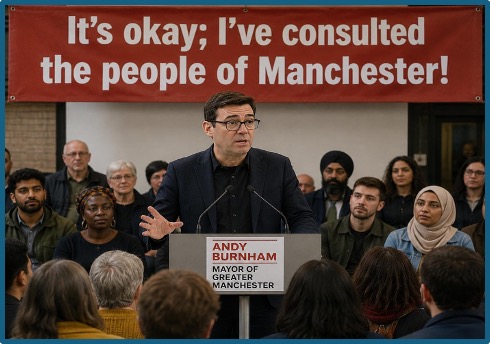
So, we have cases that have made public bodies respect promises to consult. Others where official guidance led people to expect a specific consultation on certain proposals. Or where there were proposals to withdraw a service or facility from citizens without any regard to their interests. There is even a catch-all where the absence of a consultation could be construed as being unfair to some stakeholders.
But all this is about common law.
Politics is another world – with fewer rules and only a clutch of largely-unenforceable conventions. What does and does not get consulted upon has been a mess for years. Leaving aside clear statutory requirements to consult, whether or not the public – or even directly-impacted stakeholders get to express an opinion is often at the whim of Ministers! It is far from a satisfactory situation.
Based on recent years’ experience, the nearest one might get to formulating a general principle for public policy is that Governments will not normally consult on proposals which were included in their Election Manifesto unless:-
- it helps to educate the electorate and build support for the proposals;
- it helps neutralise opposition allegations that proposals are being forced through without listening to objections;
- there are clear opportunities to choose between alternative methods of implementation, and the choice would be better made after discovering the views of key stakeholders;
In recent years, parties have become ultra-sensitive to any suggestion they are departing from commitments made at an Election. Manifestos have become millstones around their necks – acquiring a sacrosanct state of divinity that seriously affects Ministers’ ability to respond to a changing world. Instead of “This is what we hope to deliver.” Manifestos have become like contractual documents, with the media poised to highlight the slightest deviation as a ‘U-turn’ with predictable condemnation of whoever it prefers to blame.
In the case of the 2024 Labour Manifesto, the party can point to years of prior consultation with machinery such as its ‘National Policy Forum’ which also invited views from the general public. Admittedly, the final version was a determined by a small cabal of the ultra-cautious who clearly opted for the ‘Ming vase’ strategy and its self-denying decision to exclude any changes to the most effective taxes.
(Contrast this to the shock and disbelief with which Theresa May’s Cabinet greeted her 2017 Manifesto - written by her personal advisers with little or no input from anyone!)
So, one can safely assert that when Andy Burnham takes over in three weeks’ time, anything that fits squarely into the 2024 Labour Manifesto will not require a consultation.
But what happens if (or maybe when) Labour MPs and party members now regret its caution and want to consider a much more radical programme? Supposing it would like to re-open the possibility of more aggressive tax rises? Or re-instate HS2? Or look again at certain welfare benefits. In the absence of calling an early General Election, would effective consultation on these and other Manifesto extensions/departures help silence the critics?
History suggests that the media will not observe much of a Burnham honeymoon and that the clamour for him to secure his own mandate will become loud and persistent. He will therefore need to move quickly. His 29 June speech may well have achieved more in terms of a vision than all the Starmer stutterings of recent years, but as always the devil is in the detail, and this is often where mistakes are made. Trouble is – the devil can take some time to emerge ….
The traditional civil service methodology – based soundly on best practice – is to wait until most i’s are dotted and t’s crossed before inflicting their long and comprehensive consultation papers on a public that increasingly cannot cope with such documentation. As I have argued in my FOUR FUNCTIONS FRAMEWORK, there is a case for more agile engagement with those likely to be affected by various proposals –trying not to cover everything in one, probably delayed exercise.
Just as examples, and based on Burnham’s initial address, he might consider
- A NAVIGATIONAL (Where we do we want to go?) consultation on greater autonomy and devolution to local authorities
- An EXPLORATION (What are the alternative ways of doing it?) consultation on his desire for a National Care service
- A DETERMINATION (Please make a choice) consultation on controversial plans for changes to the immigration (eg ‘leave to remain’ ) issue
- An IMPLEMENTATION ( Can we secure support for ?) consultation on community involvement in local housing policies.
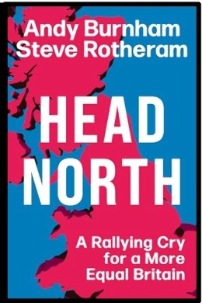
His pre-PM speech was understandably light on any commitments on public engagement, but in his book, LOOK NORTH, (see my book review here) he waxes lyrical about the need to involve local people. He will need to live up to such ideas, starting with a willingness to carry people with him. If he tries to dragoon MPs through the House of Commons lobbies against their better judgements, he will surely be reminded that, in his book, he railes against the iniquities of the Parliamentary whipping system – a sentiment most experienced Government whips regard as hilariously naïve!
Few politicians reach the top without baggage of some sort, but Burnham has much that makes him attractive to the public. Enthusiasm may well wane once he has to take unpopular decisions.
So, to retain his popularity, he will need to demonstrate a better capacity to listen than many of his predecessors.
We will watch this space!
Rhion H Jones LL.B
June 2026
For more like this, and to receive the monthly Consultation Catch-up, click here
Leave a Comment
I hope you enjoyed this post. If you would like to, please leave a comment below.