This is Blog 117
Lucy Bush of DEMOS has written a timely and thought-provoking paper which makes the case for much greater public involvement in developing the next generation of New Towns. It’s called Beyond Bricks: New Towns and the Citizenship Opportunity, and is highly relevant to those of us thinking about public engagement and consultation.
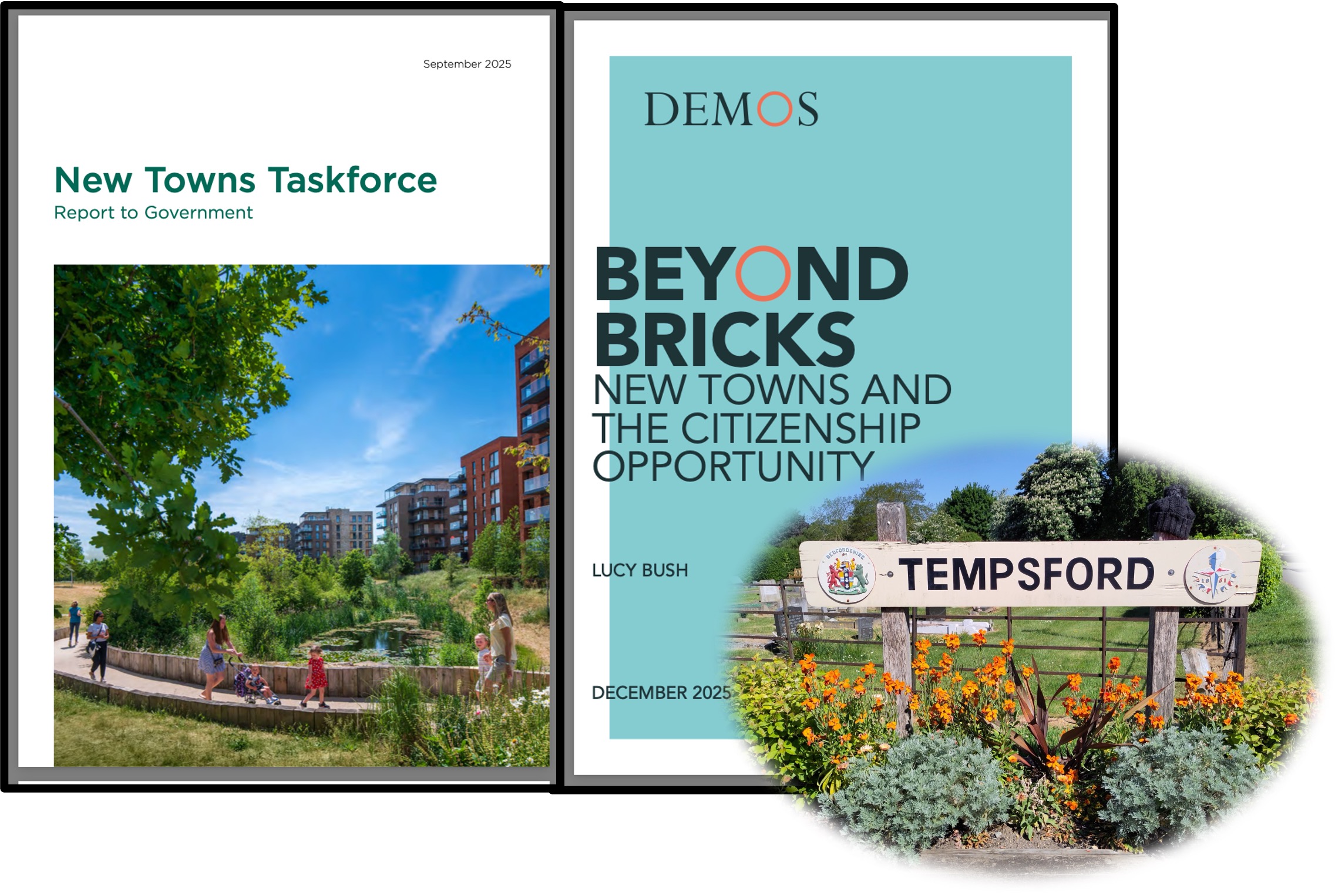
It should also be taken seriously by Ministers and anyone genuinely committed to addressing the challenge of building a million plus homes as part of the Government agenda. DEMOS argues that much of our current mechanisms for civic participation is “optimised for polarisation” rather than representation and wants to see a more participative approach to new spatial developments.
For context, we are now three months into considering the New Towns Taskforce report, and its identification of twelve potential sites. It also recommended ‘A sustained commitment to building consensus and public participation in both the designation and management of new communities’, though the Government appears yet to have addressed the issue. What DEMOS has done is taken this theme and explored ways of making it happen.
Bush draws an important distinction between:
* Citizenship and place-making or how citizens are involved in creating places, and
* Place-based citizenship, which is about their participation in existing communities.
She joins a long list of commentators who are deeply unimpressed with the current state of municipal governance, and see in the forthcoming New Towns, an opportunity to strike out on a new path, with maximum community involvement from the word GO. Serious early involvement of residents and other stakeholders, it is argued, will position new developments as co-designed initiatives, eroding the perception that new settlements are being imposed by distant bureaucrats and indifferent construction companies. That, in turn, is more likely to produce more civic-minded residents.
After all, the culture of involvement can be contagious. The community engagement platform, Commonplace has data that shows that people who have previously engaged in a consultation are five times more likely to participate than those who have never engaged before. Who can possibly argue against greater involvement in planning ahead for communities? Surely, a no-brainer?
Yet, despite this, let’s acknowledge that public involvement in policy-making is NOT flavour of the month! The new Planning and Infrastructure Act abolishes legally-enforceable pre-application consultation for NSIPs, and Ministers have characterised opponents to major projects as ‘blockers’. Even in the NHS in England, the independent voice of patients and public, HEALTHWATCH is to be abolished. And there is little sign that fine words expressing support for Citizens Assemblies et al (when in opposition!) will be translated into meaningful action.
So, is there any basis for hoping that on this occasion, DEMOS’ advice might be heeded?
I think there is. Here’s why:
- The nature of New Towns puts more power in the hands of the planners – not the developers. Even though only a handful of the twelve recommended sites are absolutely new – i.e. genuinely ‘greenfield’, the proposed governance through Development Agencies means that the overall design will be done by professional planners, who , in general, welcome close community involvement.
- ‘Blank sheet of paper’ situations like this lend themselves far more to consultation and engagement, because, by definition, there is more room for manoeuvre and more scope for discretion. What constrains planners and frustrates the public is when choices are very restricted and too many issues are already pre-determined, or close enough to a fait accompli to persuade people that it's not worth bothering
- Because of their scale, New Towns are high-profile and will attract closer media and stakeholder scrutiny; failure to involve those who are impacted will be visible and provoke opposition. The cry "We were not consulted" still resonates in Middle England. "We were never invited to a Citizens Panel " somehow does not! The media like such stories, and politicians will ensure they are minimised.
But there are challenges. You cannot seek the views of those who will live in a New Town because it will take years before you know who they are! And, who knows? Once they are there – and have voices, we may find that their views may be very different from those who were involved at the outset?
My own solution – unsurprisingly - is to focus the involvement on the FOUR FUNCTIONS FRAMEWORK I advocate for public consultations. In a nutshell, it means tailoring the dialogue to the essential function we need to fulfil at a particular time. The four functions are NAVIGATION, EXPLORATION, DETERMINATION and IMPLEMENTATION. Of these it is clear that the first and critical engagement that needs to take place is to develop the vision, determine the direction, set the agenda for the New Town. A classic NAVIGATION consultation.
To stimulate the debate, Lucy Bush tables some key questions. Among them, are
- Can we get started on citizen engagement from day 1, not just when the Development Corporations are up and running?
- Can we deepen understanding of the challenges that local planning authorities face in new towns delivery (especially as they relate to community involvement) and design a model that supports them?
- Can we overcome the perception that citizen involvement will delay delivery instead of expediting it?
It’s great to have this debate at this time. Whatever the Government’s misgivings about consultation and engagement making it difficult to build the homes and infrastructure we need, there is no way it can legislate against people and communities having opinions. Those who feel muzzled will ultimately vote for other parties, and that is why I remain sure that public dialogue will remain; at issue only is how it will be conducted, by whom and when.
For those who expect a New Town coming soon to a place near them, nothing will deter them from voicing their concerns and expressing their priorities and preferences.
In 2026, please join me in hoping that there will be enough wise planners and politicians who will find DEMOS’ ideas pretty useful after all.
Leave a Comment
I hope you enjoyed this post. If you would like to, please leave a comment below.