This is Blog No 122
When 250 Planning and Infrastructure people gather together in one room, one might at least expect them to build something.
But, of course, these were mostly not the builders but the ones that spend their time obtaining approval – or, more accurately ‘consent’, to build. NSIP stands for a Nationally Significant Infrastructure Project, and since the 2008 Planning Act, the UK has operated a special process for what is called Development Consent Orders or DCOs.
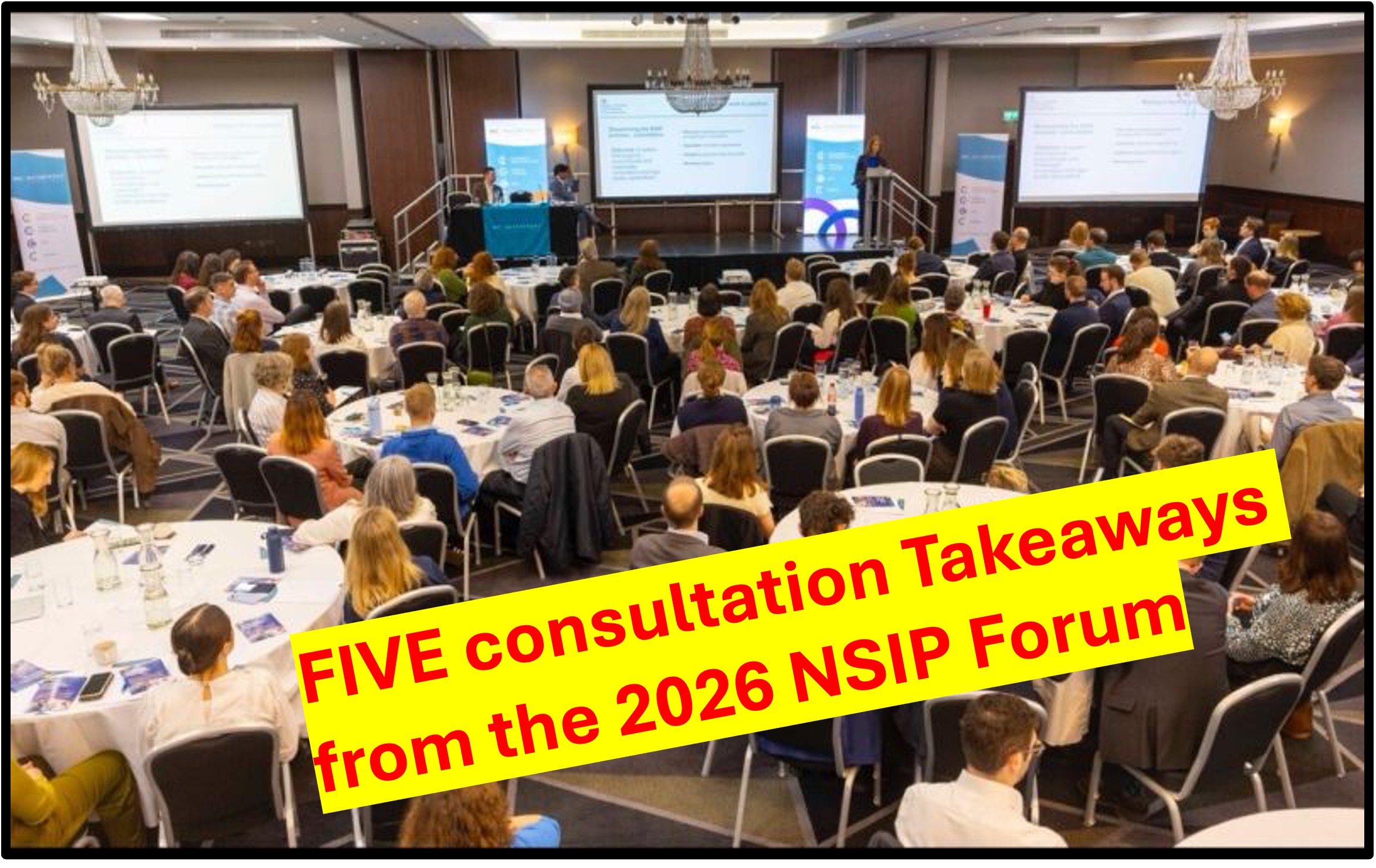
In the UK, we have a problem. It takes too long and has been getting longer. One of the highlights of Waterfront’s annual two-day NSIPs Forum was Andrew Fraser-Urquhart KC’s account of a recent visit to China and Japan to marvel at the incredible ultra-modern transport projects they have built from start-to-finish in the time that it takes us Brits to prepare the application paperwork. Well, maybe not quite, but we now carry a significant inferiority complex when it comes to delivering infrastructure.
There are of course good reasons why other cultures will out-perform us on these matters, but anxious Ministers in both recent Governments have been seeking ways to de-clutter and accelerate the system. Last year’s Planning & Infrastructure Act was the result. The Forum I have just attended takes place as the profession scratches its head about the extent to which the proposed changes will make a difference.
Much of the discussion was about consultation. So, here are my takeaways from two dozen presentations and panels.
1. The Challenge
Since coming to office, Ministers have addressed the backlog and approved 25 NSIPs. The Government has promised 150 DCOs before the next election and it is a very ambitious target. It published its Ten year plan last summer and proclaimed that a brand new National Infrastructure & Service Transformation Authority (NISTA) would lead the charge. Unfortunately, someone must have mislaid this body. It has no website, and so invisible is it to practitioners that no-one from the Forum platform saw fit to mention the organisation until lunchtime on Day Two!
It has been estimated that to stand a chance of delivering on this plan, the infrastructure industry needs to grow by over 50%. And the need for public and stakeholder engagement specialists will need to double. That’s because the greater the number of simultaneous projects, the more they affect one another and the communities that are impacted. Greater project numbers mean greater complexity. Partly to cope with this, the Government has tried to make life easier for project promoters by scrapping the statutory requirement for pre-application consultation.
2. The Waiting Game
But, of course, consultation will still be necessary. Releasing planners from demanding requirements merely gives them far more flexibility to engage and consult. It is obviously beneficial to have a dialogue with impacted communities, but in recent years the process has become rigid, unwieldy and often performative. Large amounts of money was spent producing endless volumes of mostly-unread documentation amid a strong sense of box-ticking. Few consultees think they have been meaningfully consulted.
The Ministry of Housing, Communities and Local Government will, this summer produce Guidelines, and it sent along to the Forum, Suzy Willis, Head of NSIP Strategy and Policy and a planner with years of experience to test the temperature. She said she wanted to listen and learn from practitioners. What she would have heard is much uncertainty and a plea to publish the Guidance as soon as possible. I have argued for some radical thinking by focusing on the different functions any consultation performs, but changing consultee expectations on large disruptive projects will take time. Community benefits will help but need intensive local dialogue. Katy Woodington of RWE presented a powerful case study from the Brechfa Forest in West Wales.
3. Managing the Guesswork
Even though Whitehall buys into the idea that consultation is responsible for delays in the process, it seems clear to me that what really takes time is researching the likely impact of NSIP proposals. There is an issue with statutory consulteeslike the Environment Agency, Natural England, Heritage England and others who simply have insufficient resources to provide essential advice – especially if the Planning Inspectorate continues to schedule multiple NSIP Examination hearings at the same time.
The Lower Thames Crossing is a great example. Much derided for having held six years of consultations and produced mountains of paperwork, Dr Tim Wright demonstrated the sheer technical complexity of the project has been the governing factor. One cannot meaningfully consult without having a deep understanding of the foreseeable implications especially as there is a debate as to whether you consider ‘likely’ or ‘worst-case’ environmental impacts. Only as choices are made and designs become firmer, can the vast number of stakeholders be given sufficient information as to obtain its ‘intelligent consideration’. What we probably need is more such EXPLORATION consultation on those choices - using more agile methods.
4. Addressing common stakeholders
Some areas have few if any NSIP projects, but, especially with energy and the policy of going green by 2030, there are clusters in particular parts of the country. Right now, Lincolnshire hosts much of the action, and, as Neil McBride explained, has had to develop capacity to handle up to 20 applications, six of which are decided and proceeding.
So spare a thought for the affected population. Here, and elsewhere, the same geographical areas may be engaged by different project promoters – each at different stages of the consent process, potentially taking different approaches to consultation – sometimes simultaneously, maybe overlapping and discussing impacts which may not necessarily be discrete. Projects will have knock-on effects on each other. The cumulative effect of all this engagement will not just be confusing but may well further alienate anxious communities. We often worry about consultation fatigue. Expect consultation overload!
To my mind, there is a clear need for the bigger and most affected Councils to take the lead and establish centralised communications hubs to co-ordinate the consultations and provide a sense of coherence. With the re-emergence of Regional spatial strategies – also in recent legislation, strategic authorities are going to have to start thinking about their overall areas – what goes where – find ways to mitigate the impacts and secure as much public support as possible.
5. It doesn’t stop
We have neglected the public engagement required when these projects are built. For many at the NSIP Forum, obtaining consent is ‘job done’, but it is the beginning – not the end. There is usually a time-lag before construction starts, but dialogue with impacted communities should never stop. That’s hard when the previous consultor bodies disappear from view, hard-won relationships lapse and new, in-coming contractors emerge with different priorities, working methods and values. Viki James of Ardent shared particularly vivid examples of disregarding commitments made to stakeholders some years previously, and the additional costs and delays when unforeseen problems arise if local concerns have not been fully considered.
I advise the community dialogue supplier, Publiq on these post-consent requirements, which I view as the IMPLEMENTATION consultation function. They and other providers need to equip better-resourced engagement specialists to work to improved standards that respect local communities and the promises made to them. That needs fully costed, adequate long-term budgets, priced into the project plan and not left as a parsimonious afterthought.
IN SUMMARY
For those of us who were once troubled by the relegation of public consultation to being an optional extra, it’s good to see how prominent it now features in discussion of the Ten year Infrastructure Strategy. As barristers Ryan Kohli and Lois Lane reminded everyone, the spectre of judicial review still remains. There may now be more hurdles, but acting unfairly to those who have a legitimate expectation of being consulted is still a risk to project developers who cut corners.
There remains, however an industry-wide unease that recent changes may not tackle the more fundamental flaws of our current model of NSIP consultation. The lack of public trust may not just stem from the consultation itself – but from people knowing that the purpose of the entire exercise is to arrive at a “YES” to the proposals. They fear that little or nothing they say can make a difference. What they see and hear is ‘objection-handling’ rather than meaningful consultation. Would their perceptions be different if the consultations were actually organised by the Planning Inspectorate, or maybe the Strategic Authority?
Now that is radical!
In the meantime, I will remember the 2026 NSIP Forum as one where everyone realises that we need to build quicker – but with public support.
In other words, there is another form of consent - the consent of the public!
Rhion H Jones LL.B
February 2026
For more like this, and to receive the monthly Consultation Catch-up, click here
Find the full FOUR FUNCTIONS FRAMEWORK document here
Leave a Comment
I hope you enjoyed this post. If you would like to, please leave a comment below.